
×
Due Diligence is a comprehensive investigation conducted to evaluate the financial, legal, and operational aspects of a business before entering into a significant transaction such as an acquisition, investment, merger, or partnership. The purpose of due diligence is to help you understand the true condition of the business and identify any potential risks, liabilities, or compliance issues that may affect your decision.
During the due diligence process, various records and documents are examined, including financial statements, tax filings, legal agreements, regulatory compliance records, and operational processes. This review helps verify whether the information provided by the business is accurate and whether there are any hidden risks that could impact the transaction. The process also provides insights into the company’s financial stability, operational performance, and compliance with applicable laws.
With proper due diligence support, you can analyze critical business information, assess risks, and gain a clear understanding of the company’s position before proceeding with a transaction. This enables you to negotiate better terms, avoid potential legal or financial complications, and make well-informed business decisions.
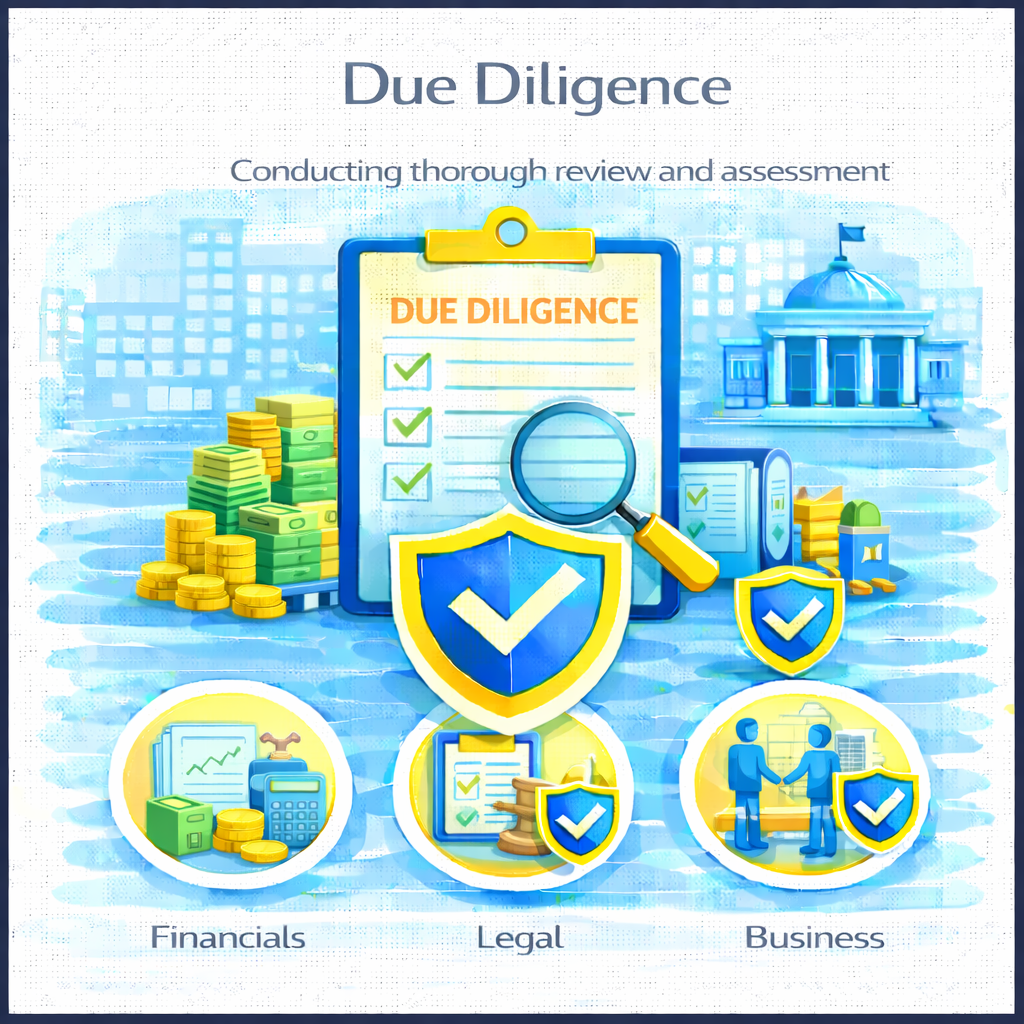
Our Due Diligence service helps you evaluate a company’s financial, legal, and operational status before making important business decisions. The service focuses on reviewing key documents, verifying financial records, and identifying potential risks that may affect your investment or transaction.
You receive assistance in examining financial statements, reviewing compliance records, analyzing business agreements, and assessing operational practices. The objective is to provide you with a clear understanding of the company’s condition so that you can proceed with confidence in your business transaction.
Due diligence can focus on different aspects of a business depending on the objective of the review.
-
Financial Due Diligence – Examines financial records, assets, liabilities, and profitability.
-
Legal Due Diligence – Reviews contracts, legal disputes, and regulatory compliance.
-
Operational Due Diligence – Evaluates business operations, management systems, and processes.
-
Tax Due Diligence – Reviews tax filings, tax liabilities, and compliance with tax regulations.
To conduct a thorough due diligence review, several documents and records must be examined.
-
Financial statements such as balance sheet and profit and loss account.
-
Tax filings and tax payment records.
-
Corporate documents including incorporation certificates and organizational records.
-
Business agreements, contracts, and partnership documents.
-
Shareholding and ownership records.
-
Bank statements and financial transaction records.
-
Any licenses, registrations, or regulatory compliance documents.
A due diligence review follows a structured process to ensure that all important aspects of the business are examined before a transaction takes place.
-
The process begins with understanding the purpose of the transaction, such as an investment, acquisition, or partnership.
-
A list of required documents and information is prepared to gather relevant financial, legal, and operational records from the target business.
-
The financial records, tax filings, and accounting documents are reviewed to verify the company’s financial position.
-
Legal documents and business agreements are examined to identify any contractual obligations or potential liabilities.
-
The company’s compliance history and regulatory filings are analyzed to ensure that the business is operating within legal requirements.
-
Any risks, discrepancies, or potential issues are identified and documented during the review process.
-
A due diligence report is prepared summarizing the findings, risks, and recommendations to help you make an informed decision.
Conducting due diligence provides several advantages when making important business decisions.
-
Helps you identify potential risks and hidden liabilities.
-
Allows you to verify the accuracy of financial and operational information.
-
Supports better negotiation and decision-making during transactions.
-
Reduces the risk of unexpected financial or legal issues after the transaction.
-
Provides greater confidence before investing, acquiring, or partnering with a business.
Following proper compliance practices during the due diligence process helps ensure that all information reviewed is accurate and legally valid.
-
All financial and operational records must be properly documented and maintained.
-
The business should provide accurate and complete information during the review process.
-
Legal agreements and contracts should be reviewed carefully to understand obligations and risks.
-
Any regulatory filings or compliance requirements should be verified during the review.
-
The findings from the due diligence review should be documented clearly for decision-making purposes.
Related Services


Why Choose Arthtattava
Expert-Led Financial Solutions: Our team combines deep domain expertise with practical experience across industries.
End-to-End Accounting Support: From bookkeeping to reporting, we manage complete financial operations seamlessly.
Technology-Driven Approach: We leverage advanced tools like Tally, OCR, and automation for accuracy.
Customized Business Solutions: Every service is tailored to your business needs, scale, and growth stage.
Data Accuracy & Compliance Focus: We ensure error-free records while strictly adhering to regulatory requirements.
Reliable & Timely Delivery: Consistent turnaround times with proactive communication to support business decisions.
Know More Details