
×
Internal Audit is a structured review of your organization’s financial activities, operational processes, and internal control systems. The objective of an internal audit is to ensure that your business operations are efficient, financial records are accurate, and internal policies are properly followed. Unlike external audits, internal audits are conducted to help management monitor risks, improve operational efficiency, and strengthen internal controls within the organization.
During an internal audit, various aspects of your business are examined, including accounting records, financial transactions, compliance procedures, and operational practices. The audit helps identify errors, irregularities, and process weaknesses that could impact financial reporting or business operations. It also helps you verify whether internal policies and procedures are being followed consistently across the organization.
With proper internal audit support, you can review business processes, detect potential risks early, and implement improvements to strengthen internal governance. Regular internal audits help you maintain better financial discipline, improve decision-making, and ensure that your organization operates in a transparent and controlled environment.
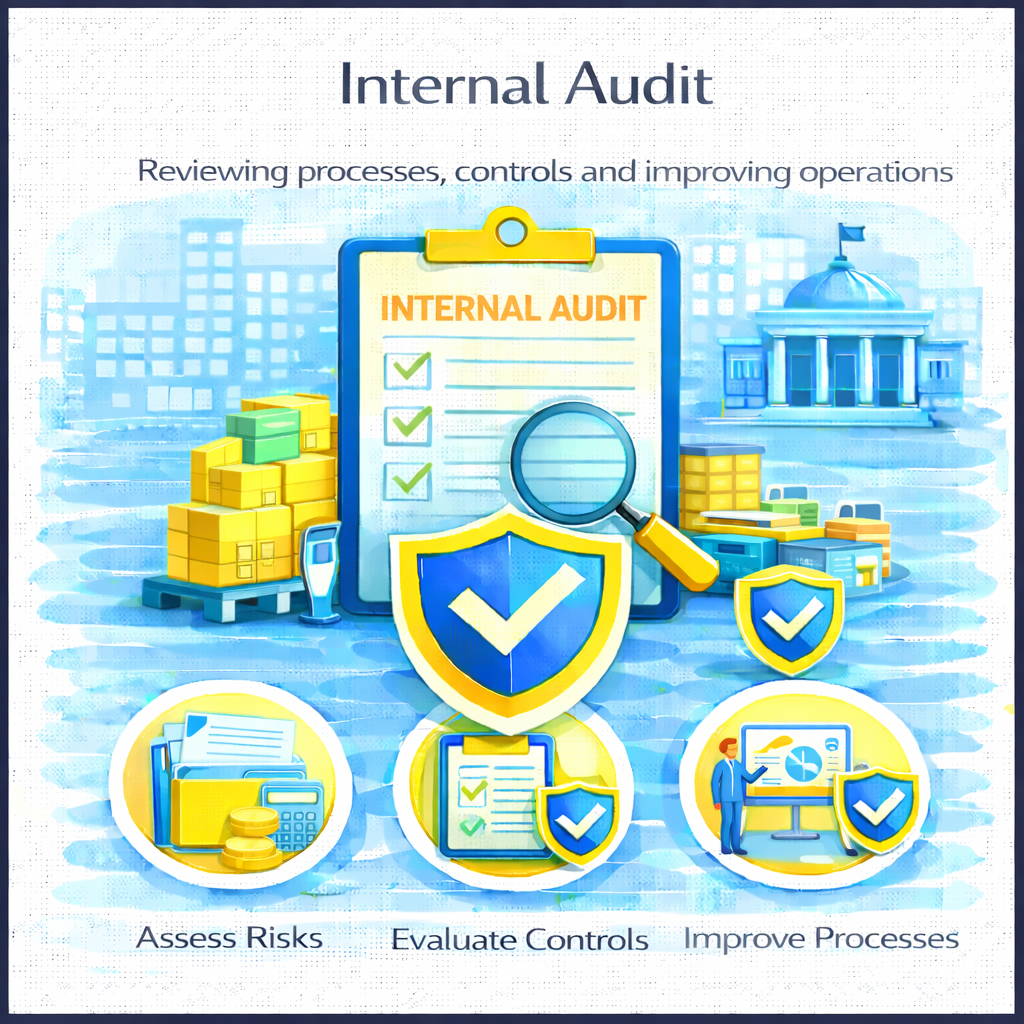
Internal Audit
In Stock
₹0
0%
Off
Verification Documents Required
- Memorandum of Association (MOA)
- Articles of Association (AOA) (AOA)
- Board Resolution Copy (Board resolution)
Our Internal Audit service helps you evaluate your organization’s internal controls, financial systems, and operational processes to ensure accuracy and efficiency. The service focuses on reviewing financial records, identifying operational risks, and verifying whether internal procedures are being followed effectively.
You receive support in examining accounting records, reviewing compliance practices, analyzing internal processes, and identifying areas that require improvement. The objective is to help you strengthen internal control systems, reduce operational risks, and improve the overall efficiency of your business operations.
Internal audits can focus on different aspects of an organization depending on the objectives of the review.
-
Financial Audit – Focuses on verifying financial transactions and accounting records.
-
Operational Audit – Reviews business operations to identify inefficiencies and improve performance.
-
Compliance Audit – Ensures that business activities follow applicable laws, regulations, and internal policies.
-
Risk Audit – Evaluates potential risks that may affect business operations or financial stability.
To conduct an effective internal audit, several financial and operational records may need to be reviewed.
-
Financial statements such as profit and loss account and balance sheet.
-
Accounting records and transaction reports.
-
Purchase invoices, sales invoices, and supporting documents.
-
Bank statements and payment records.
-
Internal policies, procedures, and approval documentation.
-
Inventory records and stock reports, if applicable.
-
Any additional operational or financial documents relevant to the audit scope.
Conducting an internal audit involves a systematic review of your company’s financial and operational activities.
-
The process begins with understanding your business operations, financial processes, and internal policies to determine the scope of the audit.
-
Your financial records, accounting entries, and transaction documents are reviewed to verify their accuracy and completeness.
-
Key internal control systems and approval processes are examined to assess whether they are functioning effectively.
-
Operational activities and compliance procedures are analyzed to identify any risks, irregularities, or inefficiencies.
-
Any discrepancies, control weaknesses, or process gaps are documented during the audit review.
-
Based on the findings, recommendations are provided to improve internal controls and operational processes.
-
A detailed internal audit report is prepared summarizing observations, risk areas, and suggested corrective actions.
Conducting internal audits provides several advantages for improving business operations and financial management.
-
Helps you identify risks, errors, and irregularities in financial and operational processes.
-
Strengthens internal control systems and governance practices.
-
Improves accuracy and transparency in financial reporting.
-
Helps management make informed decisions based on reliable financial information.
-
Supports better compliance and risk management within the organization
Maintaining proper compliance during internal audits helps ensure that your organization’s processes remain transparent and reliable.
-
You should maintain accurate accounting records and financial documentation for all transactions.
-
Internal policies and procedures should be documented and consistently followed.
-
Financial transactions must be properly authorized and recorded.
-
Any issues or control weaknesses identified during the audit should be corrected promptly.
-
Proper documentation should be maintained for future reviews and management decisions.
Related Services


Why Choose Arthtattava
Expert-Led Financial Solutions: Our team combines deep domain expertise with practical experience across industries.
End-to-End Accounting Support: From bookkeeping to reporting, we manage complete financial operations seamlessly.
Technology-Driven Approach: We leverage advanced tools like Tally, OCR, and automation for accuracy.
Customized Business Solutions: Every service is tailored to your business needs, scale, and growth stage.
Data Accuracy & Compliance Focus: We ensure error-free records while strictly adhering to regulatory requirements.
Reliable & Timely Delivery: Consistent turnaround times with proactive communication to support business decisions.
Know More Details