
×
A Stock Audit is a detailed verification of your business inventory to ensure that the quantity and value of stock recorded in your books match the actual stock available. Inventory often represents a significant portion of a company’s assets, making it essential to maintain accurate records and proper control over stock movements. A stock audit helps you examine inventory records, purchase and sales transactions, stock valuation methods, and physical inventory to confirm the correctness of your financial reporting.
During a stock audit, your stock registers, invoices, warehouse records, and accounting data are reviewed and compared with the physical stock available at your premises or storage locations. The objective is to detect discrepancies such as shortages, excess stock, valuation errors, or reporting inconsistencies. Stock audits are commonly required by banks and financial institutions when inventory is used as collateral for working capital or loan facilities.
Professional assistance can help you conduct a systematic stock review, reconcile inventory records, and prepare audit reports required by lenders or management. With proper verification and documentation, you can strengthen internal controls, improve inventory management, and ensure transparency in financial reporting.
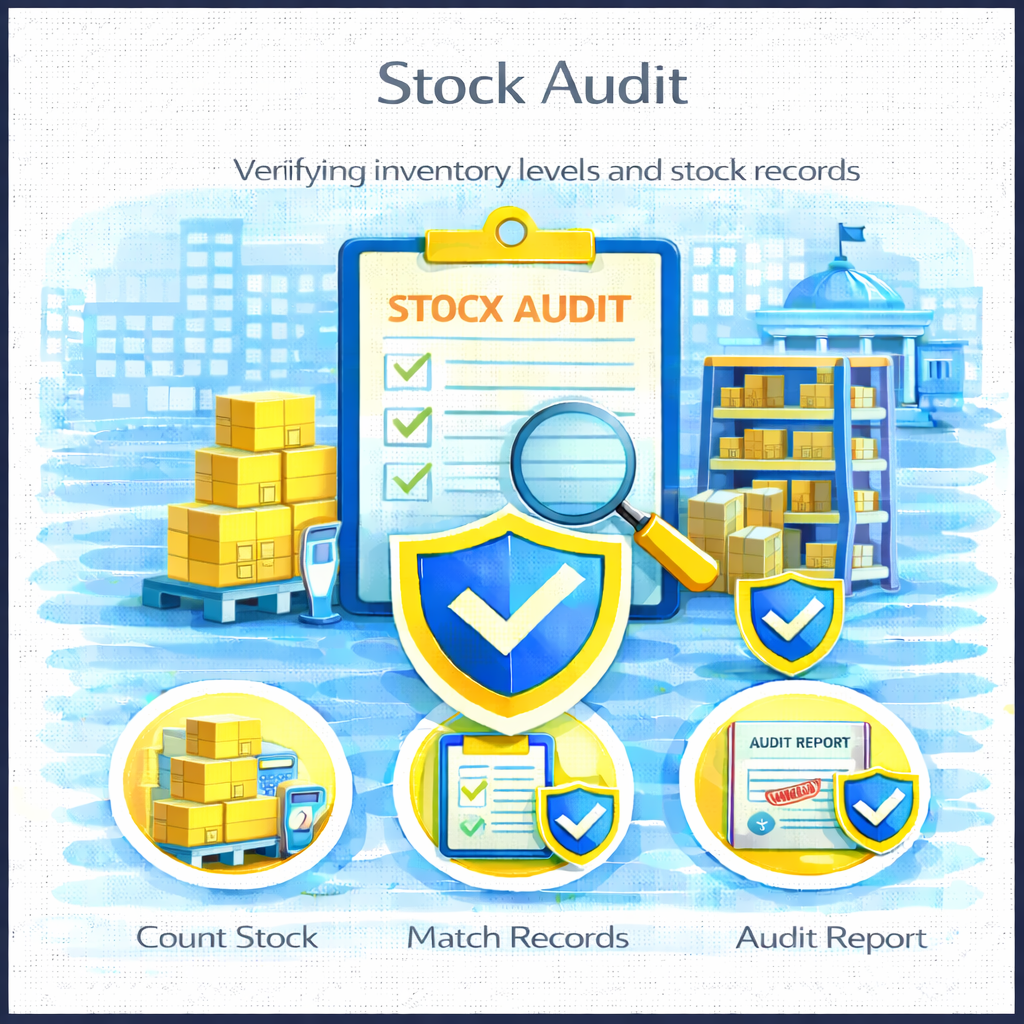
Our Stock Audit service helps you verify and validate your inventory records to ensure that your stock reporting is accurate and reliable. The service focuses on reviewing stock registers, purchase and sales records, and warehouse documentation to confirm that your inventory records match the actual stock available.
You receive assistance in conducting physical stock verification, reconciling inventory with accounting records, identifying discrepancies, and preparing stock audit reports. This structured approach helps you maintain accurate inventory records and meet reporting requirements for financial institutions, management, or regulatory purposes.
Stock audits can be conducted in different ways depending on the purpose and scope of the review.
-
Bank Stock Audit – Conducted by banks or financial institutions to verify inventory used as collateral for loans or credit facilities.
-
Internal Stock Audit – Performed by businesses to review inventory management, detect discrepancies, and strengthen internal controls.
-
Statutory Stock Audit – Conducted as part of statutory financial audits to verify inventory valuation and reporting.
-
Periodic Stock Audit – Performed at regular intervals to ensure accurate inventory records and prevent stock-related discrepancies.
To conduct an effective stock audit, certain inventory and financial records must be reviewed.
-
Stock register or inventory records maintained by the business.
-
Purchase invoices and supplier records related to inventory.
-
Sales invoices and delivery records showing stock movement.
-
Warehouse records or inventory management reports.
-
Financial statements and accounting records related to inventory valuation.
-
Bank statements or loan documents, if the audit is conducted for lending institutions.
-
Any additional records related to inventory transactions or stock movement.
A stock audit follows a systematic process to verify inventory records and confirm that the stock reported in your financial statements is accurate.
-
The process begins with collecting and reviewing your inventory records, including stock registers, purchase records, sales invoices, and warehouse documents.
-
Your inventory records are analyzed and compared with accounting records to understand stock movements and valuation methods.
-
A physical verification of stock is conducted at your business premises or warehouse to confirm the quantity of inventory available.
-
The physical stock is reconciled with the recorded stock balances to identify shortages, excess quantities, or discrepancies.
-
The valuation of inventory is reviewed to ensure that stock is recorded using appropriate accounting methods.
-
Any differences or irregularities in stock records are documented and analyzed.
-
A stock audit report is prepared summarizing the findings, discrepancies identified, and recommendations for improving inventory control.
Conducting a stock audit provides several advantages for improving inventory management and financial transparency.
-
Helps you verify the accuracy of inventory records and physical stock.
-
Identifies discrepancies such as shortages, excess stock, or valuation errors.
-
Strengthens internal control systems for inventory management.
-
Improves financial reporting accuracy and transparency.
-
Helps you meet bank or financial institution requirements for stock verification.
Maintaining proper compliance during a stock audit ensures that your inventory records remain accurate and reliable.
-
You should maintain accurate stock registers and inventory records for all inventory transactions.
-
All purchase and sales transactions must be properly documented and recorded.
-
Inventory valuation methods should follow consistent accounting practices.
-
Physical stock verification should be conducted periodically to ensure record accuracy.
-
Any discrepancies identified during the audit should be corrected and properly documented.
Related Services


Why Choose Arthtattava
Expert-Led Financial Solutions: Our team combines deep domain expertise with practical experience across industries.
End-to-End Accounting Support: From bookkeeping to reporting, we manage complete financial operations seamlessly.
Technology-Driven Approach: We leverage advanced tools like Tally, OCR, and automation for accuracy.
Customized Business Solutions: Every service is tailored to your business needs, scale, and growth stage.
Data Accuracy & Compliance Focus: We ensure error-free records while strictly adhering to regulatory requirements.
Reliable & Timely Delivery: Consistent turnaround times with proactive communication to support business decisions.
Know More Details