
×
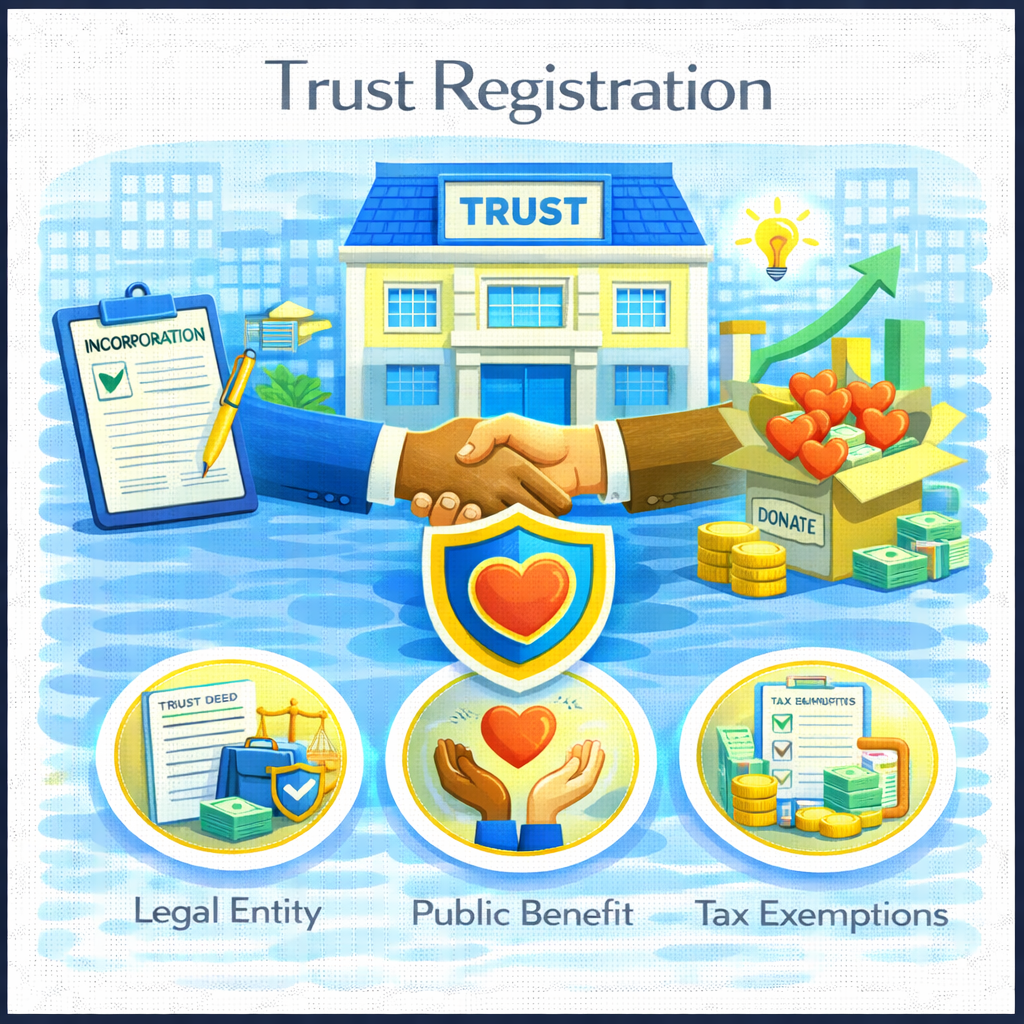
Individuals create a trust by setting aside a portion of their assets or property for the benefit of another person. A trust represents a fiduciary relationship among three key parties — the trustor (author of the trust), the trustee, and the beneficiary. These parties and their respective roles are clearly defined in the trust deed at the time of trust registration.
A trust comes into existence when the trustor transfers a specific asset or property to the trustee, who is legally bound to manage and administer it for the benefit of the beneficiary. The beneficiary, often a third party, may or may not have a direct relationship with the trustor or trustee.
Thus, the essence of a trust lies in the relationship between these parties. As per the Indian Trusts Act, 1882, a trust is defined as a fiduciary relationship in which the trustor places confidence in the trustee to hold and manage property for the benefit of the beneficiary.
Trusts
in India are classified based on their purpose and the nature of their beneficiaries.
Understanding these categories is essential before proceeding with trust
registration.
- Private Trusts: Private trusts are created for the benefit of specific individuals, families, or a defined group of persons. The beneficiaries are clearly identified and are often closely related to the trust’s founder. Private trusts in India are primarily governed by the Indian Trusts Act, 1882. These trusts are commonly used for asset protection, estate planning, and wealth management within families.
- Public Trusts: Public trusts are established for the benefit of the general public or a large section of society. They are typically formed for charitable, educational, medical, or religious purposes. Public trusts are regulated under various laws, including the Religious Endowments Act, 1863, the Charitable and Religious Trusts Act, 1920, and the Bombay Public Trusts Act, 1950 (applicable in certain states). Charitable and religious trusts are the most common forms of public trusts in India.
- Public-Cum-Private
Trust: A
public-cum-private trust is formed to serve both public and private interests.
The trust’s income may be used partly for the benefit of the general public and
partly for specific individuals or families. In such trusts, the beneficiaries include a
combination of public beneficiaries and identified private individuals. This
structure allows flexibility in utilizing trust funds for broader as well as
specific purposes.
Before
initiating the online trust registration process, ensure the following
documents are prepared and verified:
- Trust
Deed: A
properly drafted Trust Deed printed on the appropriate stamp paper as per the
prescribed stamp value of the respective state.
- Photographs: Two passport-size photographs of the settlor (author), trustees, and witnesses
involved in the trust.
- PAN
Cards: Self-attested copies of PAN cards of the settlor and all trustees.
- Identity
Proof: Valid identity proof of the settlor and trustees (Aadhaar Card, Passport, Voter
ID, or Driving License).
- Address
Proof of Individuals: Residential address proof of the settlor and trustees (Aadhaar Card, Passport,
Bank Statement, or Utility Bill).
- Registered
Office Address Proof: Address proof of the trust’s registered office, such as; Utility
bill (Electricity/Water/Property Tax receipt) or Rental
agreement (if rented property).
- No
Objection Certificate (NOC): NOC from the property owner if the registered office is situated on rented or
leased premises.
- Authorization
from Trustees/Partners (if applicable): Written consent or authorization from trustees/partners for the formation of
the trust.
- 12A
and 80G Registration (Optional but Recommended): Certificates under Sections 12A and 80G issued by the Income Tax Department to
claim tax exemptions and enable donors to avail tax deductions (if applicable).
Having
these documents ready ensures a smooth and hassle-free online trust
registration process while maintaining legal compliance.
Registering
a charitable trust provides numerous benefits to both individuals and
organizations. Below are the key advantages of charitable trust registration in
India:
- Charitable
Engagement: Establishing
a charitable trust enables individuals to contribute meaningfully to social
causes. It allows founders to support beneficiaries, communities, and selected
charitable activities in a structured and sustainable manner.
- Tax
Exemptions: Registered
trusts can avail tax benefits under the Income Tax Act, subject to registration
with the Income Tax Department (such as 12A and 80G registration). These
exemptions reduce the tax burden and encourage donations.
- Financial
Assistance to the Public: A
registered trust can provide structured financial aid and support to
underprivileged individuals and communities through educational, medical, and
social welfare initiatives.
- Legal
Recognition and Protection: Registration
under the Indian Trusts Act, 1882 provides legal validity and safeguards the
trust against unnecessary disputes or claims, ensuring compliance with
applicable laws.
- Family
Wealth Protection: Trusts
are effective tools for protecting and managing family assets. They help
allocate specific properties or funds while ensuring proper administration and
preservation of wealth.
- Avoidance
of Probate: Assets
placed in a trust can be transferred to beneficiaries without undergoing the
probate process, ensuring smooth and timely distribution.
- Immigration
and Asset Planning Benefits: Trusts
can be beneficial during immigration or emigration, helping in asset
structuring, tax planning, and safeguarding wealth across jurisdictions.
By
registering a trust, individuals gain financial advantages, legal security, and
flexibility in asset management, while also contributing to social welfare and
charitable causes.
Related Services


Why Choose Arthtattava
Expert-Led Financial Solutions: Our team combines deep domain expertise with practical experience across industries.
End-to-End Accounting Support: From bookkeeping to reporting, we manage complete financial operations seamlessly.
Technology-Driven Approach: We leverage advanced tools like Tally, OCR, and automation for accuracy.
Customized Business Solutions: Every service is tailored to your business needs, scale, and growth stage.
Data Accuracy & Compliance Focus: We ensure error-free records while strictly adhering to regulatory requirements.
Reliable & Timely Delivery: Consistent turnaround times with proactive communication to support business decisions.
Know More Details